GHRM MBA Course Invites Industry Expert Eric Korman to Share Insights on Seamless Transformation
Written based on student reflection by Nathasia Leonita
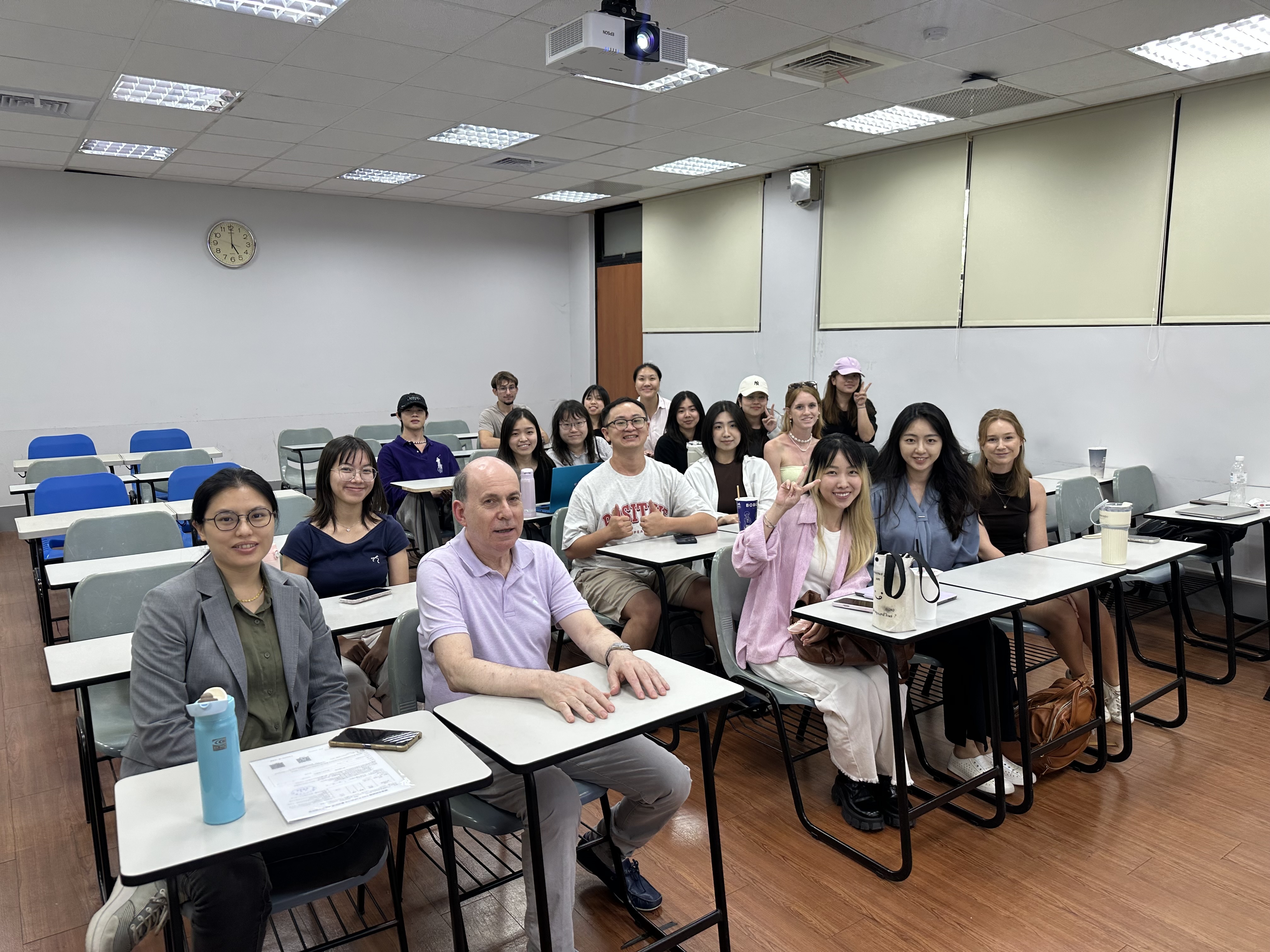
As part of the GHRM MBA course Organizational Design and Digital Transformation, the program recently invited Mr. Eric Korman to deliver a guest lecture on the topic of “Seamless Transformation.” Through a series of real-world business cases and personal experiences, Mr. Korman shared valuable insights into organizational transformation, leadership, and corporate culture, leaving a strong impression on students attending the session.
During the lecture, Mr. Korman emphasized that transformation is not simply about changing business strategies or processes, but about building a culture that supports long-term organizational success. Referencing business leaders such as Lou Gerstner and Richard Clark, he explained that organizational culture plays a decisive role in whether transformation efforts can truly succeed. Students reflected that the session helped them realize culture is far more than a company slogan or statement displayed on a wall; rather, it shapes decision-making, performance evaluation, and employee engagement throughout the organization.
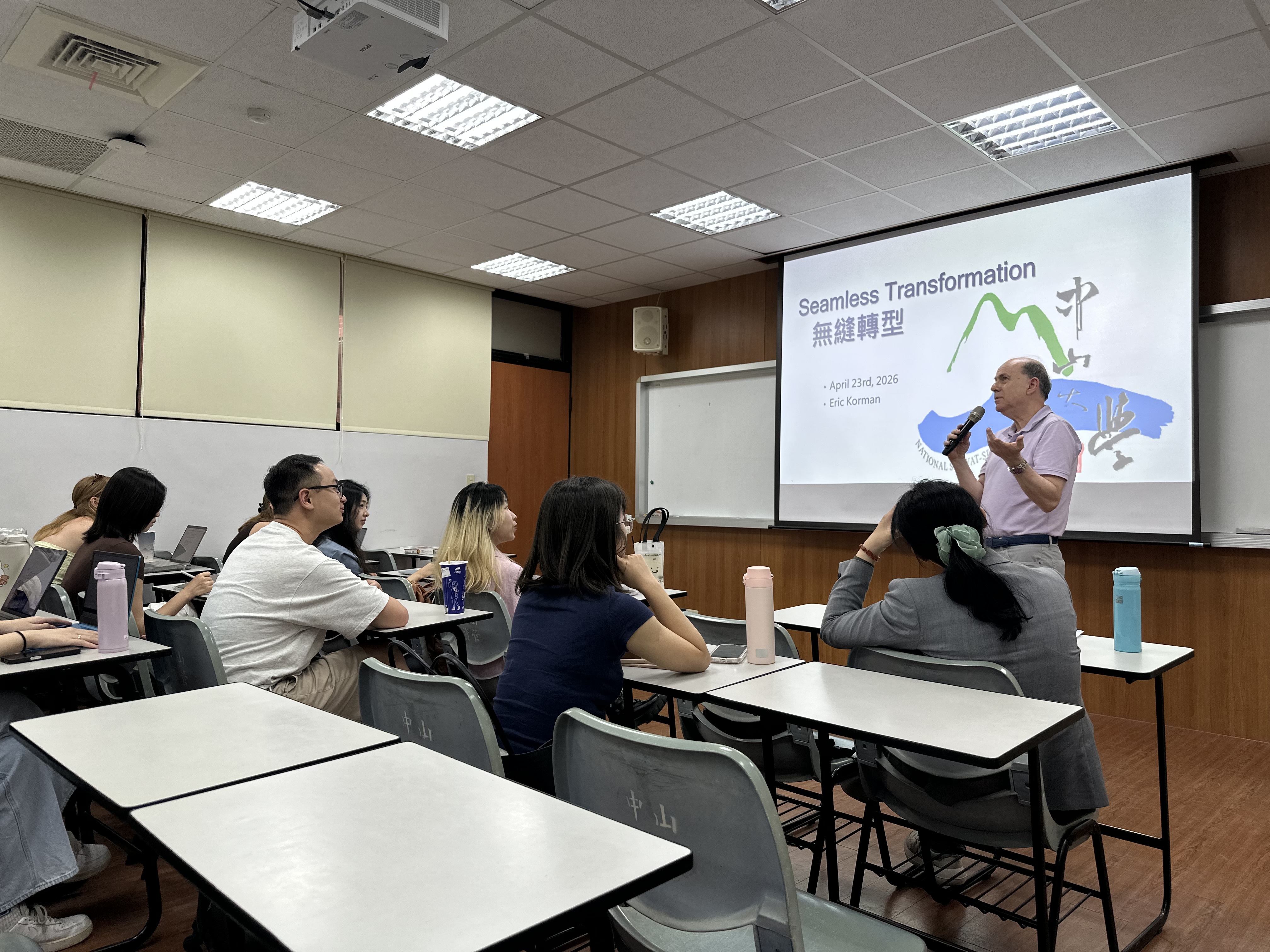
One of the most memorable examples discussed during the lecture was a Samsung case involving the rework of 236,000 monitors across 23 countries due to a seemingly minor cost-saving decision of NT$0.8 per unit. Through this case, Mr. Korman illustrated how short-term decisions made without considering total operational costs can lead to significant consequences. Students noted that while concepts such as quality cost and total cost of ownership are often discussed in the classroom, hearing an actual business case with real numbers and outcomes provided a much deeper understanding of these management principles.
Another example that particularly resonated with students involved a television production plan in which the defect rate percentage was decreasing, while the total number of defective products increased from 80,000 to 240,000 units. By asking students to identify the issue within the plan, Mr. Korman encouraged them to think critically about how organizations measure performance. The discussion highlighted the importance of looking beyond percentages and ratios in order to fully understand operational outcomes.
The lecture also addressed leadership and organizational collaboration through the example of former Cisco CEO John Chambers, who evaluated senior leadership teams based on their ability to collaborate effectively. Mr. Korman explained that some leaders ultimately left the organization because they could not adapt to this expectation. Students reflected that this example demonstrated how transformation sometimes requires leaders to make difficult but necessary decisions in order to remove barriers to organizational change.
Toward the end of the session, Mr. Korman shared personal career advice with students, encouraging them to value integrity, critical thinking, accountability, and the ability to reduce complexity in business operations. Drawing from his professional experiences working alongside internationally recognized business leaders, he emphasized that these qualities are developed through experience and practice rather than theory alone.
Overall, the lecture offered students an opportunity to connect classroom concepts with practical business experiences. Students reflected that the session deepened their understanding that successful transformation is not a short-term project, but an ongoing commitment embedded within an organization’s culture, structure, performance indicators, and people.