《114-2 GHRM591》Building Better Collaboration in a Changing World
Written by Celine Chen, Teaching Assistant, GHRM MBA
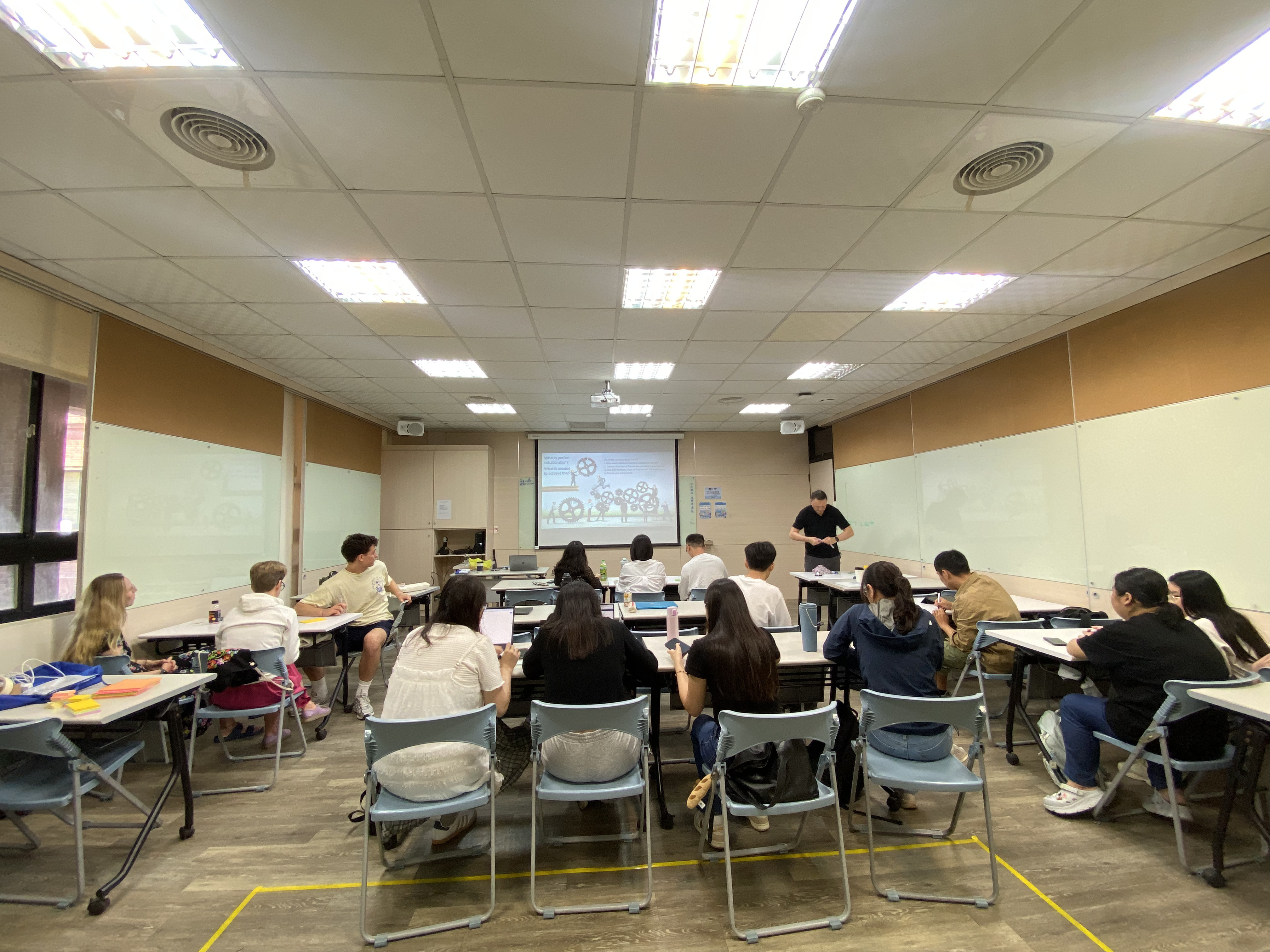
On April 14, students in the GHRM MBA program’s Production & Operations Management class welcomed guest speaker Michael Eckolt, a freelance trainer, coach, and consultant specializing in change management and collaboration. Michael delivered an engaging and highly interactive session that explored how teamwork and organizational practices must evolve in an increasingly complex world. Drawing from his professional experience, he introduced both theoretical frameworks and interactive activities to help students better understand what effective collaboration looks like in practice and why it has become a critical skill in modern organizations.
The session began with a brainstorming exercise in which student teams were asked to define the elements of “perfect collaboration.” After gathering responses from across groups, Michael synthesized several recurring themes, including the importance of clear standard operating procedures, transparent and consistent communication, well-defined roles and responsibilities, and a sense of shared understanding among team members. This activity set the foundation for the rest of the lecture by highlighting that collaboration is built upon purposeful behaviors and structures. Michael explained that the shift from traditional project management to more agile methods empowers teams to respond quickly to change, encourages iterative progress, and supports continuous learning. This shift also requires a corresponding growth mindset which values experimentation, feedback, and improvement within an organization.
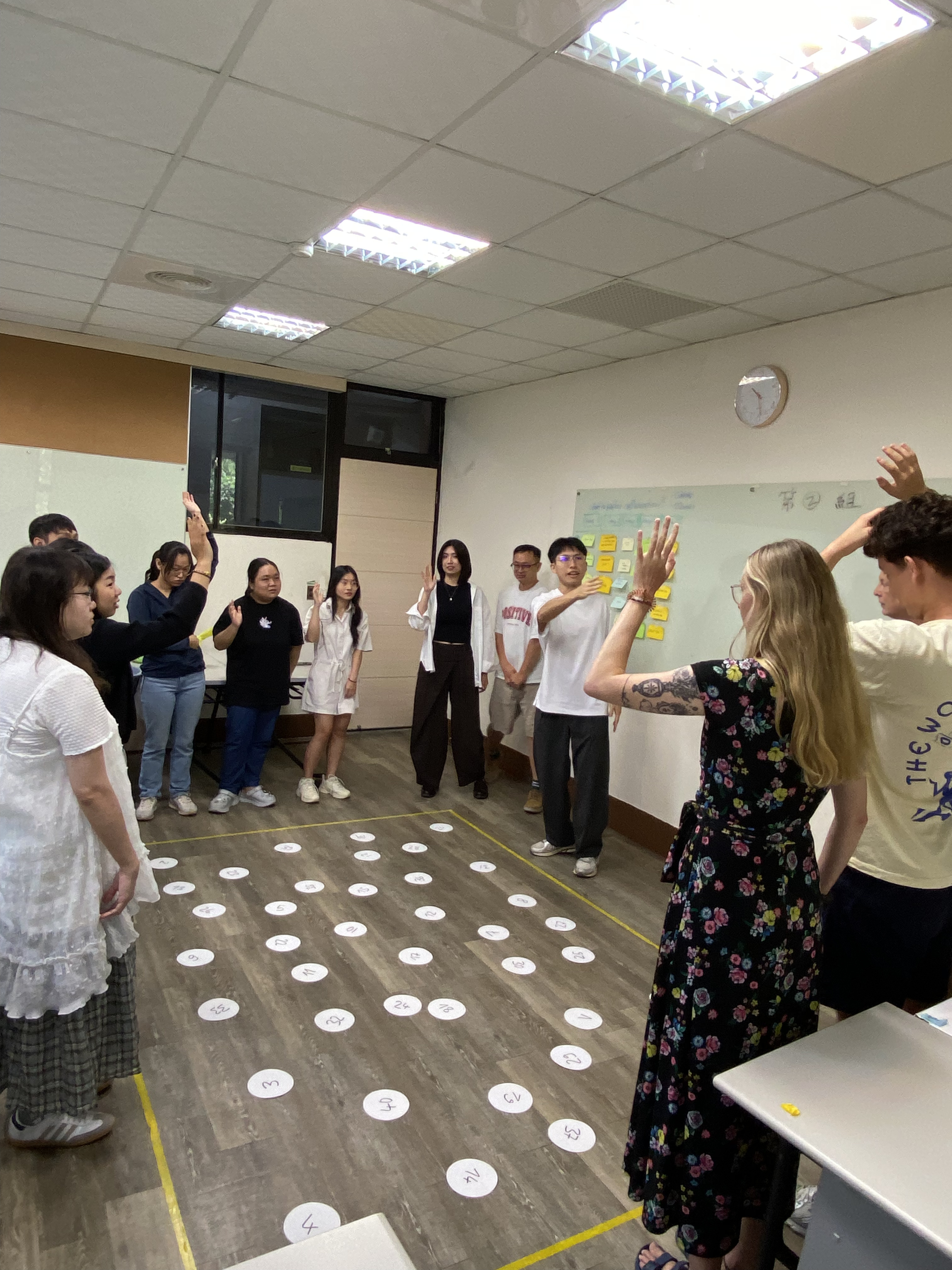
A key strength of the workshop was its interactive design, which allowed the class to experience these concepts firsthand. In one activity, students participated in a game that simulated different management styles, ranging from micro-management to fully empowered, agile teams. By completing the same task under varying conditions, they were able to directly observe how productivity and team dynamics improved in each scenario. This exercise reinforced the idea that effective collaboration is closely tied to how teams are structured and managed.
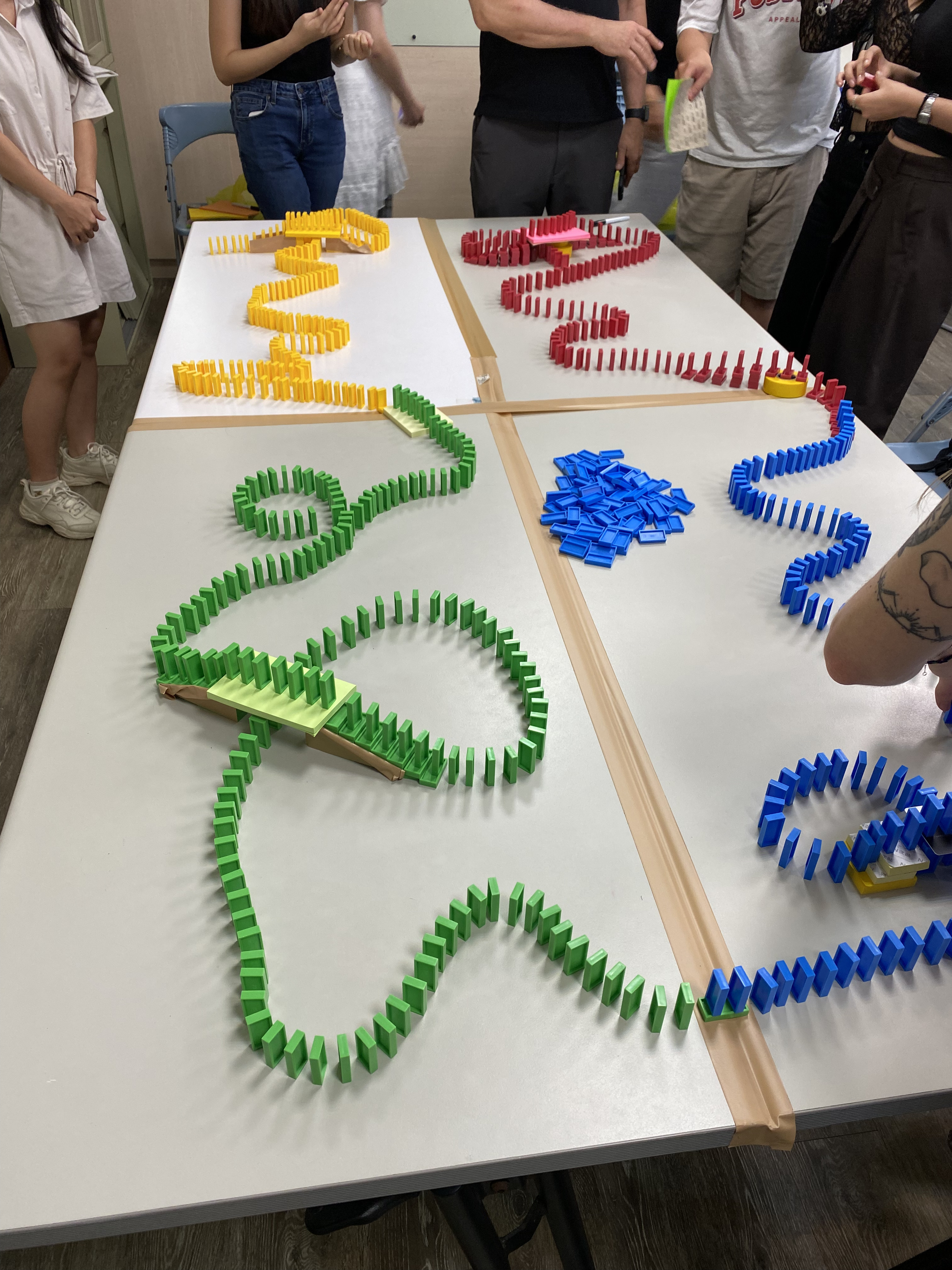
Another memorable activity involved a domino-building challenge. Each team was responsible for creating their own domino setup, but the ultimate goal was to connect all team designs into one cohesive system that would successfully cascade from start to finish. The task highlighted the value of cross-team communication and alignment, especially when creating a holistic final product. It served as a powerful example for when success depends not only on separate team performance, but also on how well different groups work together.
Overall, Michael’s lecture provided a comprehensive and practical exploration of collaboration in today’s changing environment. By combining conceptual insights with interactive experiences, he demonstrated that successful collaboration requires adaptive mindsets and strong interpersonal coordination. The session left students with a deeper understanding of how collaboration has evolved over time and why it remains a critical driver of organizational success.